Stop Trying to Win Clients on Calls: Win Them Before You Get There
Here's what changed recently and most people haven't caught up to yet.
AI has made the research phase noisier. Before a client gets on a call with you, they've already looked you up. They've also looked up two or three other people. And increasingly, everyone they're looking at has decent copy, a reasonable bio, a website that doesn't look like it was built in 2011. The surface-level credibility signals that used to help you stand out are becoming table stakes.
Which means if a client can't find a specific reason why you, before they ever talk to you, they're getting on that call with four tabs open and no clear favourite. You're starting from zero. So is everyone else they're considering.
You prepare for sales calls. You know your talking points. You've practiced your answers to the hard questions. You show up ready.
And then you spend the first fifteen minutes of the call proving you're worth talking to.
Explaining who you are. Establishing your credibility. Trying to build enough trust in forty-five minutes that a relative stranger hands you a major decision.
Here's what the best closers figured out a long time ago: the call isn't where the decision gets made. It's where the decision gets confirmed. And if you're still trying to make the sale during the call, you're starting from behind every single time.
The game is won before you pick up the phone. Here's how to play it that way.
The Call Is Too Late to Start Selling
Think about what a client actually does before they get on a call with you.
They Google you. They look at your website. They read your bio. They scroll your LinkedIn or Instagram. They might even ask someone who knows you. By the time they show up on that call, they've already formed an opinion. They've already decided, at least provisionally, whether you seem worth their time.
If everything they found before the call made you look identical to the three other people they're also talking to, you've got a problem that no amount of charm or preparation can fully fix in forty-five minutes.
The sales call is the confirmation, not the pitch. Clients don't get on calls hoping to be convinced. They get on calls hoping to confirm what they already believe. Your job is to make sure what they already believe, going in, is that you're the right fit.
That work happens before the call. Most sales pros skip it entirely.
Why Clients Don't Choose the Best Option (They Choose the Easiest One to Understand)

Here's something that will either relieve you or annoy you, depending on how competitive you are.
Clients aren't choosing the best option. They're choosing the easiest one to understand.
Most clients don't have the expertise to evaluate who's actually better at the job. They can't tell the difference between an average agent and a great one, or between a decent consultant and an exceptional one. What they can tell is whether they understand what working with you will look like.
When a client clearly understands your process, your approach, and why it fits their situation, they feel safe choosing you. When they don't, they keep shopping around looking for someone who makes more sense.
This means the most powerful thing you can do before a sales call has nothing to do with your credentials, your track record, or how many five-star reviews you have. Those things help, but they're not what tips the decision.
What tips the decision is whether the client, before they ever talk to you, can answer the question: "I understand exactly what working with this person looks like, and it feels right for me."
What "Winning Before the Call" Actually Looks Like
It's not more content. It's not a flashier website.
It's a document. Specifically, a "working with me" document that you send before every first conversation. One or two pages that explain, in plain language, how you work, who you work best with, and what a client can expect from the experience.
When a client gets that document before your call, everything shifts. They arrive already oriented. They already know your process. They already understand your approach. The call stops being an audition and starts being a conversation between two people who are figuring out if they're a good fit.
That is a completely different energy than the one most calls start with.
The clients who were going to choose you anyway get there faster. The clients who aren't a good fit often figure it out before the call and don't book it. Both of those outcomes are wins.
Want to know if your pre-call positioning is actually doing its job?
Grab the free Pre-Sale Positioning Checklist. Ten questions that show you exactly where clients are forming the wrong impression before you ever get on a call.
Download the free checklist here
The Three Things That Do the Most Work Before the Call
If you want clients to arrive already sold, three things need to be doing their job before you ever pick up the phone.
Your bio and online presence.
This is the first place most clients look, and it's where most sales pros do the least work. A bio that lists credentials and years of experience tells a client you're qualified. Big deal — so is everyone else they're considering. A bio that clearly describes who you work best with, what your approach actually looks like, and what makes your way different gives a client a reason to stop looking and start leaning toward you.
The pre-call email or message.
Most people send a calendar link and nothing else. The confirmation email is an opportunity almost everyone ignores. Send something with it. A short note that sets the context for the call, links to your working with me document, and tells the client exactly what to expect. It takes three extra minutes and it changes the entire tone of the conversation.
The working with me document.
This is the one that does the heaviest lifting. One or two pages that answers the questions every client is asking themselves before they hire someone: how does this person actually work, who do they do their best work with, and what will the experience feel like from my side. When a client reads that document before your call, they walk in already knowing the answers. The call becomes a formality in the best possible way.
What's Actually In a Working With Me Document
Worth being specific here because most people either make it too long or turn it into a brochure, and both versions miss the point.
The document should answer four things, clearly and briefly:
How you work. Walk through your process in plain language. What happens from the moment someone signs on with you to the moment the job is done. Specific steps, not vague promises.
Who you work best with. The specific type of client, in the specific situation, where your approach produces the best results. Be honest about this. The right clients will feel seen. The wrong ones will self-select out, which is equally valuable.
What makes your approach different. One specific, concrete reason why the way you do this produces a better outcome for your kind of client. Not "I'm more dedicated" — something a client could actually verify.
What they can expect from you. Communication style, response times, what you handle vs. what you need from them. The specifics that make a client feel like they know exactly what they're signing up for.
What it shouldn't contain: your career history, a list of your certifications, or anything that sounds like it belongs on a resume. That information doesn't help a client decide. It just adds noise.
Keep it short. Keep it specific. Keep it in your own voice. A document that sounds like a real person is going to do more work than a polished brochure that sounds like every other polished brochure.
How to Use It So It Actually Changes Something
Having the document is one thing. Deploying it at the right moments is what makes it work.
With the booking confirmation.
As soon as someone books a call, send the document with a short note: "Before we talk, here's a quick overview of how I work so we can make the most of our time together." Done. Clients show up oriented instead of cold.
When someone asks how you work.
Instead of typing a long explanation in a DM or email, you send the document. It answers the question better than you can in a text message and it makes you look organized and prepared, which is its own form of pre-selling.
When someone says they're comparing options.
"That makes complete sense. Here's something that might help as you're making your decision." Send the document. You've just given them something concrete to hold onto while they're evaluating, and it's specifically designed to make the case for you without you having to make it out loud.
When someone goes quiet after an initial conversation.
The document gives you a reason to follow up that isn't just "checking in." You're sending them something useful. Something that moves the conversation forward instead of just reminding them you exist.
The Difference Between Calls That Close and Calls That Don't
It's rarely the call itself.
The calls that close easily are the ones where the client arrived already understanding your value. They weren't comparing you to three other people in their head during the call. They weren't still deciding whether you were credible. They showed up ready to talk about fit, not qualifications.
The calls that don't close are usually the ones where the client arrived cold. Skeptical. Still in research mode. Trying to figure out if you're worth their time while you're simultaneously trying to convince them you are. That dynamic is exhausting for both sides and it doesn't have a great conversion rate.
The difference between those two calls is almost never what happened on the call. It's what happened before it.
You can't control how good the call goes. You can control how prepared the client is when they arrive. That's where the work actually is.
Build the Document That Does the Selling Before You Show Up
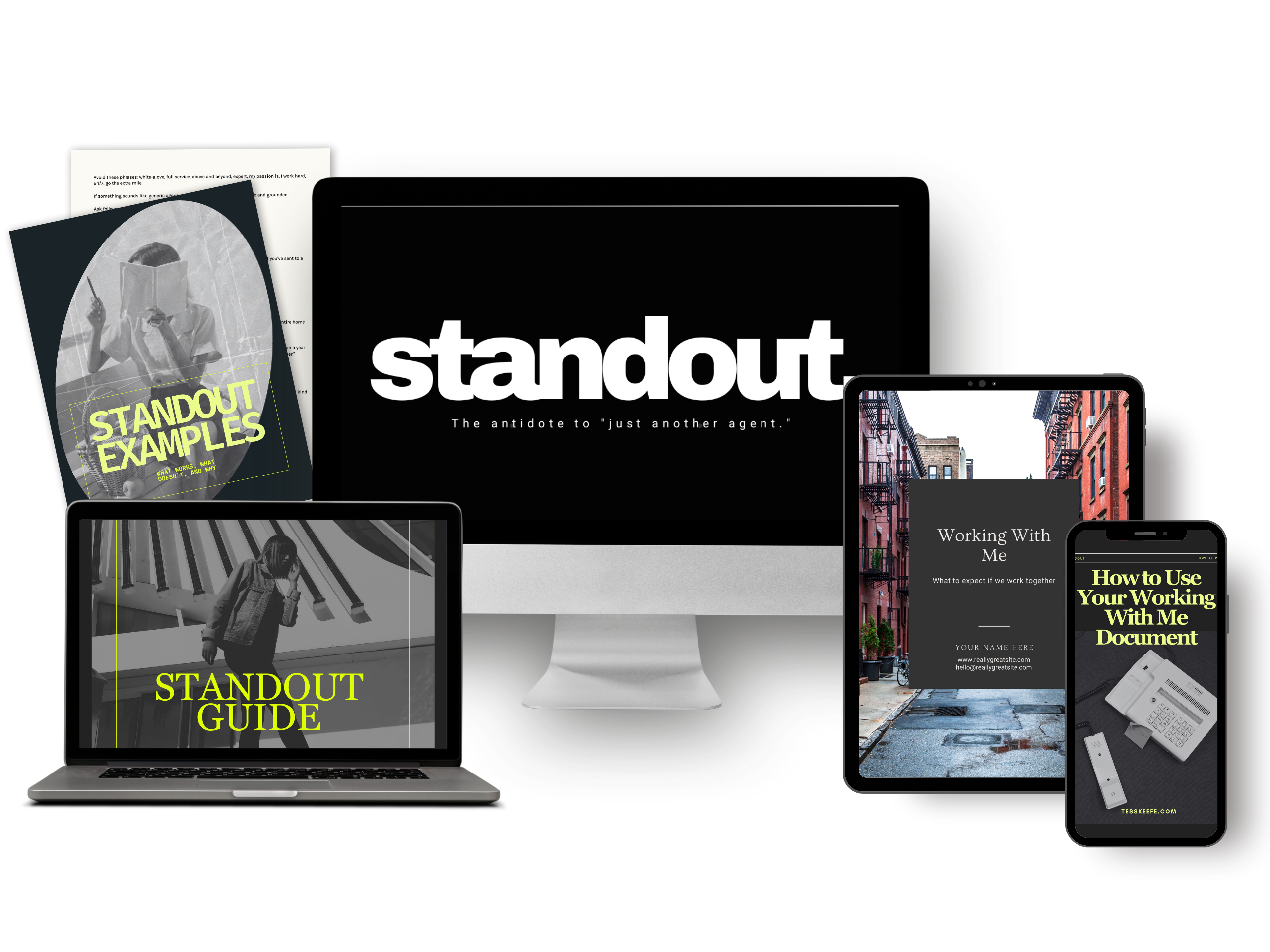
STANDOUT is the framework that walks you through building your own working with me document. The one that answers "why should I choose you?" before anyone asks, so clients arrive on calls already knowing the answer.
A buyer version and a seller version, built in under an hour, ready to send before every first conversation. Build it once and stop starting every call from zero.
Get STANDOUT for $37
The call is the easy part. This is how you make it that way.
